
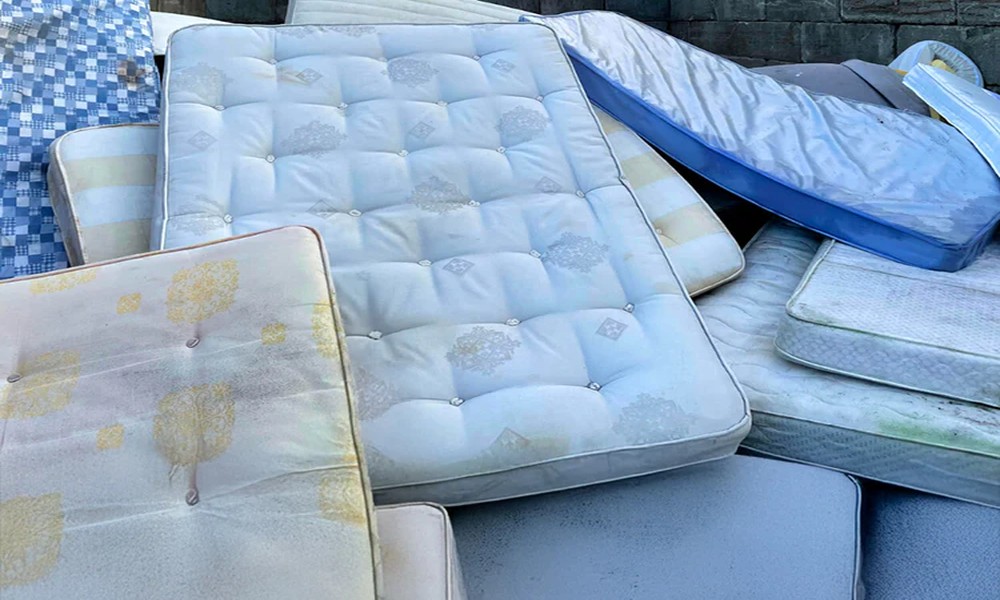
A mattress is bulky, awkward, and often considered useless once its comfort fades. Yet, what happens to it next can tell a bigger story about how we treat the planet and the resources beneath our own beds.
The Environmental Toll of Mattress Waste
Each year, millions of mattresses are discarded across North America. Their size alone creates headaches for landfills, but the problems go deeper.
How Mattresses Impact Landfills and Ecosystems
A single mattress can take up more landfill space than a refrigerator or couch. Their complex construction, layers of foam, metal springs, wood, and textiles, means they rarely compress neatly. As these piles mount up, valuable land is lost and decomposition is painfully slow.
The Challenge of Mattress Decomposition and Toxic Materials
Left in a landfill, a mattress can take decades to break down. During that time, chemicals from flame retardants, glues, and synthetic foams may leach into soil and groundwater. The environmental footprint doesn’t end with the mattress’s last night’s sleep; it lingers for generations.
Reuse as a Pillar of Sustainable Living
Sustainability is about more than recycling. It is a mindset shift, rethinking how to extend the life of products and materials.
Defining Mattress Reuse in the Context of the 3 Rs
The “Reduce, Reuse, Recycle” mantra is familiar, but reuse occupies a special role. Instead of breaking items down completely, reuse finds value in what already exists. In mattress recycling, this means salvaging parts, like steel springs, wood frames, cotton, and foam, for new uses.
Why Reuse Outperforms Disposal and Recycling Alone
When mattresses are simply dumped or incinerated, embedded resources are lost. Recycling is better, but often energy intensive. Reuse, however, keeps materials in circulation with less processing, saves raw resource extraction, and reduces pollution.
Case Study: Recyc-Mattress and the Circular Economy Model
In Canada, mattress disposal is being redefined by organizations like Recyc-Mattress, whose model goes well beyond basic recycling.
Overview of Recyc-Mattress’s Approach to Reduce, Reuse, and Recycle
Their strategy is threefold: cut down landfilled mattresses, recover components for new products, and raise awareness among manufacturers, retailers, and consumers. Experts point to resources like Recyc-Matelas Canada mattress recycling as prime examples of how mattresses can be integrated into a circular economy.
Transforming Mattress Components into New Products
Mattresses are deconstructed, yielding a surprising array of reusable materials.
Polyurethane to Carpet Underlay
The foam, once cushioning sleep, is shredded and pressed into carpet underlay, giving it a new role underfoot in homes and offices.
Cotton for Thermal Insulation and Automotive Use
Cotton fibers are cleaned and processed for thermal insulation, or even as padding in vehicle interiors, reducing demand for virgin materials.
Metal and Wood Repurposing
Steel innersprings are melted down and recast, replacing the need for new metal. Wooden frames are chipped and used as mulch or biomass fuel.
Economic and Community Benefits of Mattress Reuse
The positive effects ripple outward from the environment to local communities.
Job Creation and Local Industry Support
Mattress recycling facilities require skilled workers to disassemble, process, and manage materials. This creates jobs and fosters expertise in green industries.
Reducing Costs for Consumers and Municipalities
Landfilling mattresses is expensive due to their size and slow breakdown. Reuse and recycling lower municipal waste costs and can even supply cheaper raw materials for local manufacturers.
Overcoming Barriers to Mattress Reuse
Despite clear benefits, obstacles remain.
Consumer Awareness and Engagement Challenges
Many people simply don’t know what to do with an old mattress. Education and accessible collection points are crucial.
Infrastructure and Logistics for Collection and Processing
Reusing mattresses at scale requires robust logistics, collection trucks, sorting centers, and safe disassembly practices.
How Stakeholders Can Drive Mattress Reuse Forward
It takes a collaborative effort.
Role of Manufacturers and Retailers
By designing mattresses for easy disassembly and promoting take-back programs, industry leaders can close the loop.
Municipalities and Landfill Operators as Partners
Cities can mandate diversion from landfill or partner with recyclers to handle the flow of discarded mattresses efficiently.
Consumer Actions That Make a Difference
Choosing to reuse, donate, or recycle a mattress instead of dumping it in a landfill multiplies the impact.
Looking Ahead: Innovations and Policy Trends
Change is accelerating on multiple fronts.
Emerging Technologies in Mattress Reuse and Recycling
Automated disassembly lines and advanced material sorting promise to increase efficiency and recover even more value.
Policy Incentives That Encourage Circular Mattress Economies
Some regions are introducing extended producer responsibility laws, making manufacturers responsible for product end-of-life. Such policies can spark innovation and boost reuse rates.
Practical Steps for Individuals to Support Mattress Reuse
Everyone has a role in shrinking mattress waste.
How to Donate or Sell Used Mattresses Responsibly
Check local nonprofits, shelters, or furniture banks for donation policies. Selling or giving away a lightly used mattress online can also keep it in use.
Identifying Certified Reuse and Recycling Programs Near You
Look for certified programs, like those highlighted by mattress recycling organizations in your area, to ensure responsible processing and maximum environmental benefit.
Mattress reuse is more than an afterthought; it is a pivotal strategy in building a world where resources circle back and waste is minimized. The next time a mattress reaches the end of its life, consider its new potential, and the impact your decision can have.